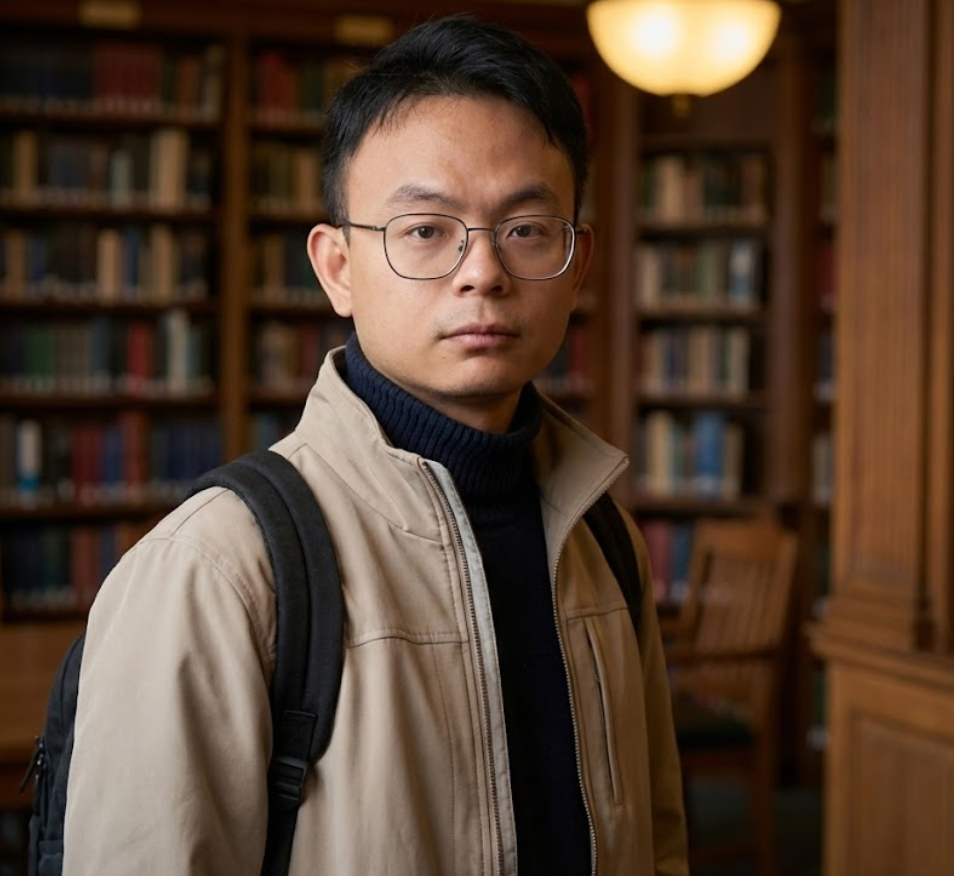
Shujian Guo
Associate Professor & Graduate Supervisor, School of Foreign Languages, Tongji University
Shujian Guo is an Associate Professor and graduate supervisor at the School of Foreign Languages, Tongji University. He earned his PhD from the University of Limerick (Ireland), where he also served as a visiting scholar. He holds an MA in Language Policy and Language Strategy from Shanghai International Studies University, an MTI from East China University of Political Science and Law, and dual bachelor's degrees in Finance and English from Beijing Foreign Studies University. His research focuses on audience cognition assessment and governance of AIGC, and on applications of AIGC in language engineering (AI agents, prompting, etc.). He has published more than ten papers in major journals and leads one National Social Science Fund Youth Project and one Ministry of Education Humanities and Social Sciences project.
Research Focus
Selected Publications
Research Projects
Teaching
- Language and Society Major Course
- Academic Writing Major Course
- Quantitative Research Methods Major Course